The Exhibition
Exploring the Boundaries of Architecture
Architecture is more than construction — it embodies human ambition, reflects societal transformations, and mirrors technological progress. From utopian dreams to dystopian critiques, from radical experimentation to functional design, architectural thought reshapes how we inhabit the world.
This exhibition presents five key narratives, each offering a different perspective on the evolution of cities, spaces, and ideas. Journey through the past, present, and future of architecture — where limits are redefined, urban visions come to life, and the built environment transforms our everyday.
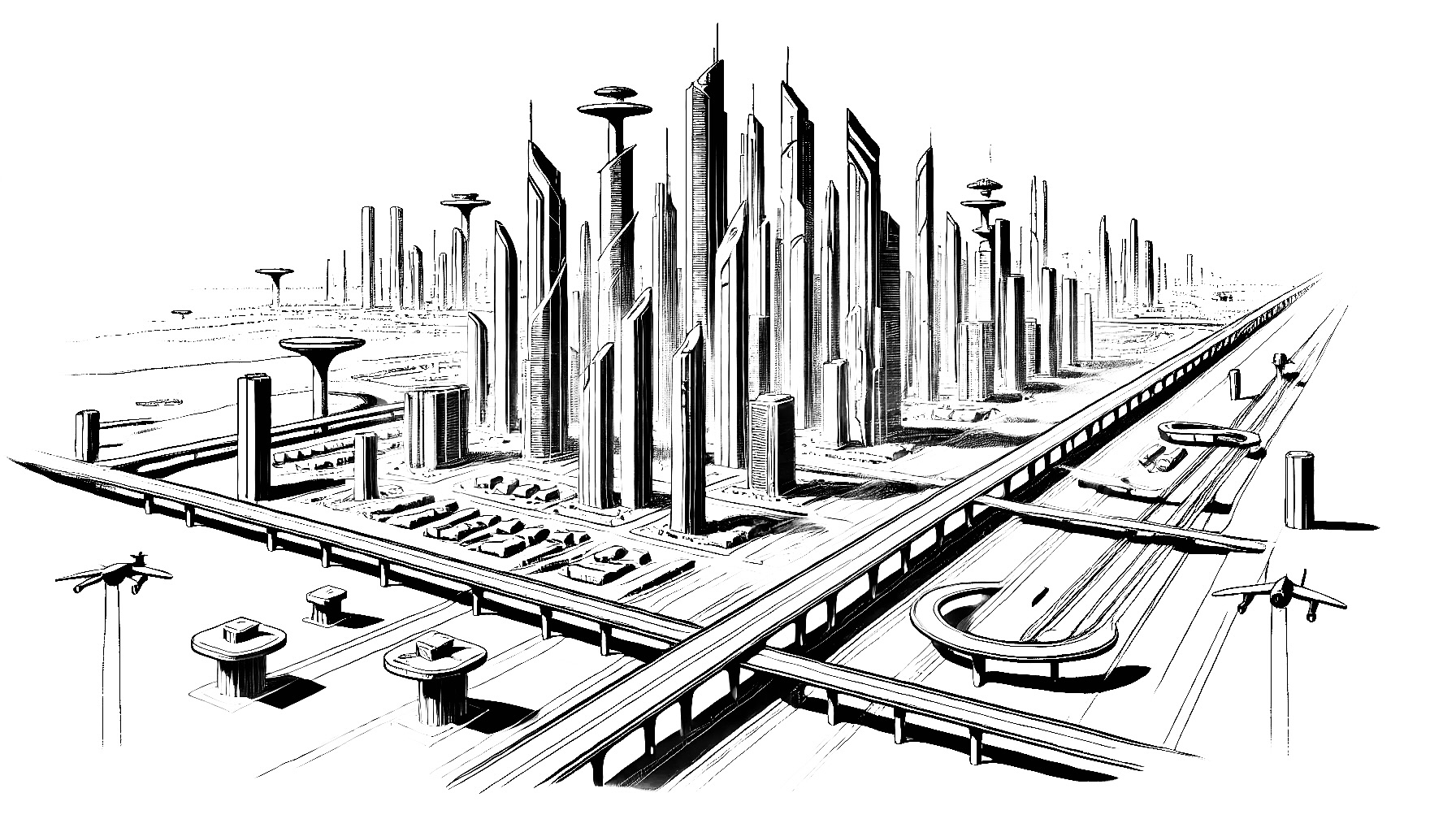
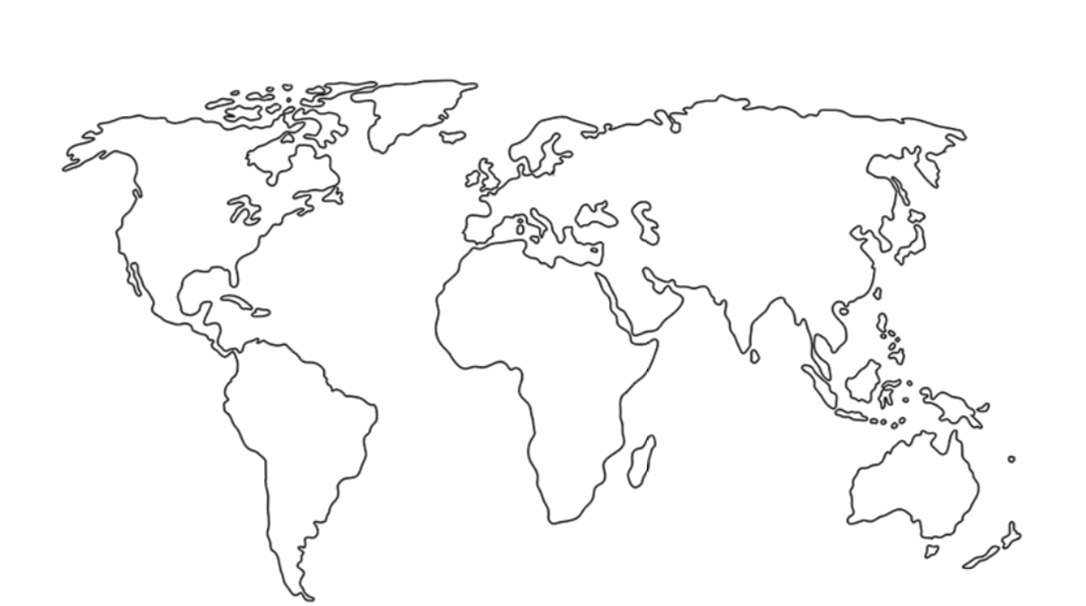
In Space — Where Architecture Rewrites Maps
Space is never just a container — it’s constructed, contested, imagined. Architecture doesn’t only fill space; it defines how we move, dwell, gather, escape. This section explores spatial visions that stretch the limits: cities that float, buildings that move, environments shaped by data or desire. Here, space becomes something elastic, reactive, alive.
You’ll encounter structures that dissolve boundaries, architectures without sites, and geographies rewritten by technology or ideology. These works reject fixed grids in favor of fluid systems, ephemeral zones, radical forms of inhabitation. In each case, space is not a given — it’s an argument, a question, a proposal.
In Time — Building the Past, Designing the Future
Architecture is shaped by time — and shapes it in return. Every project captures a temporal tension: the urgency of the present, the weight of the past, the pull of imagined futures. In this section, time is not linear but layered. You'll move across decades and ideologies, from mid-century utopias to post-digital experiments, tracing how each era leaves its mark on space.
Some projects resurrect forgotten traditions; others anticipate worlds not yet possible. Time appears as ruin, as memory, as glitch. Whether fast-forwarding into speculative futures or slowing down to reclaim lost rhythms, these works ask what it means to build in a moment — and for moments yet to come.
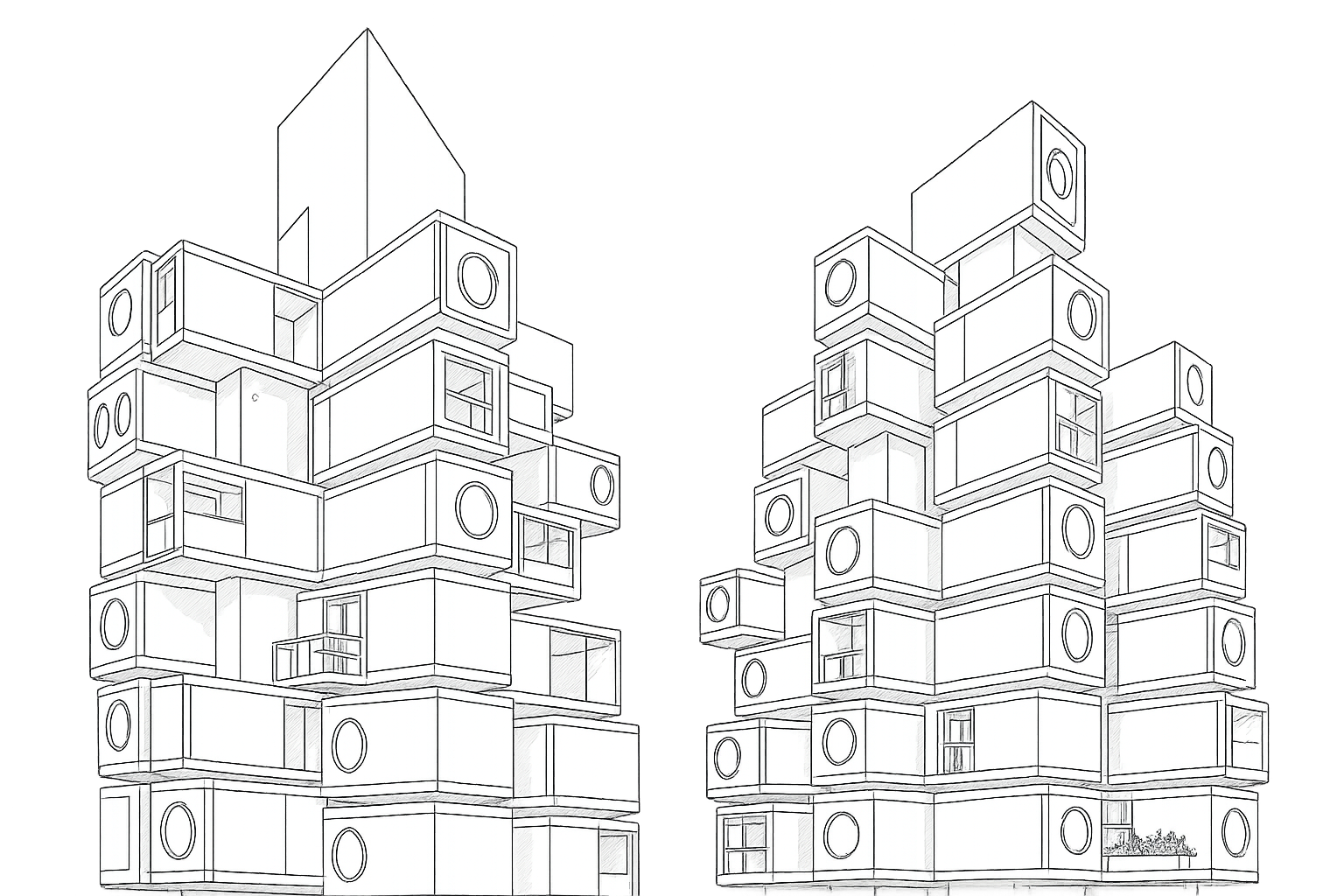
In Reality — The Thin Line Between Fiction and Construction
Not everything here was built — but that doesn’t make it any less real. Architecture begins in the imaginary: sketches, dreams, provocations that test the boundaries of what can be made. This section navigates that in-between space where speculation meets intention. Some projects remain unbuilt manifestos; others materialized in altered forms. All of them reveal the power of architectural thought to shape reality, even when it never touches the ground.
You’ll find virtual cities, paper megastructures, and proposals too radical for their time. But you’ll also see how these visions influence culture, policy, and the built world. The unbuilt speaks loudly — challenging norms, expanding vocabularies, bending the rules of what counts as architecture. Reality, here, is porous. What matters isn’t always what stands, but what stirs.
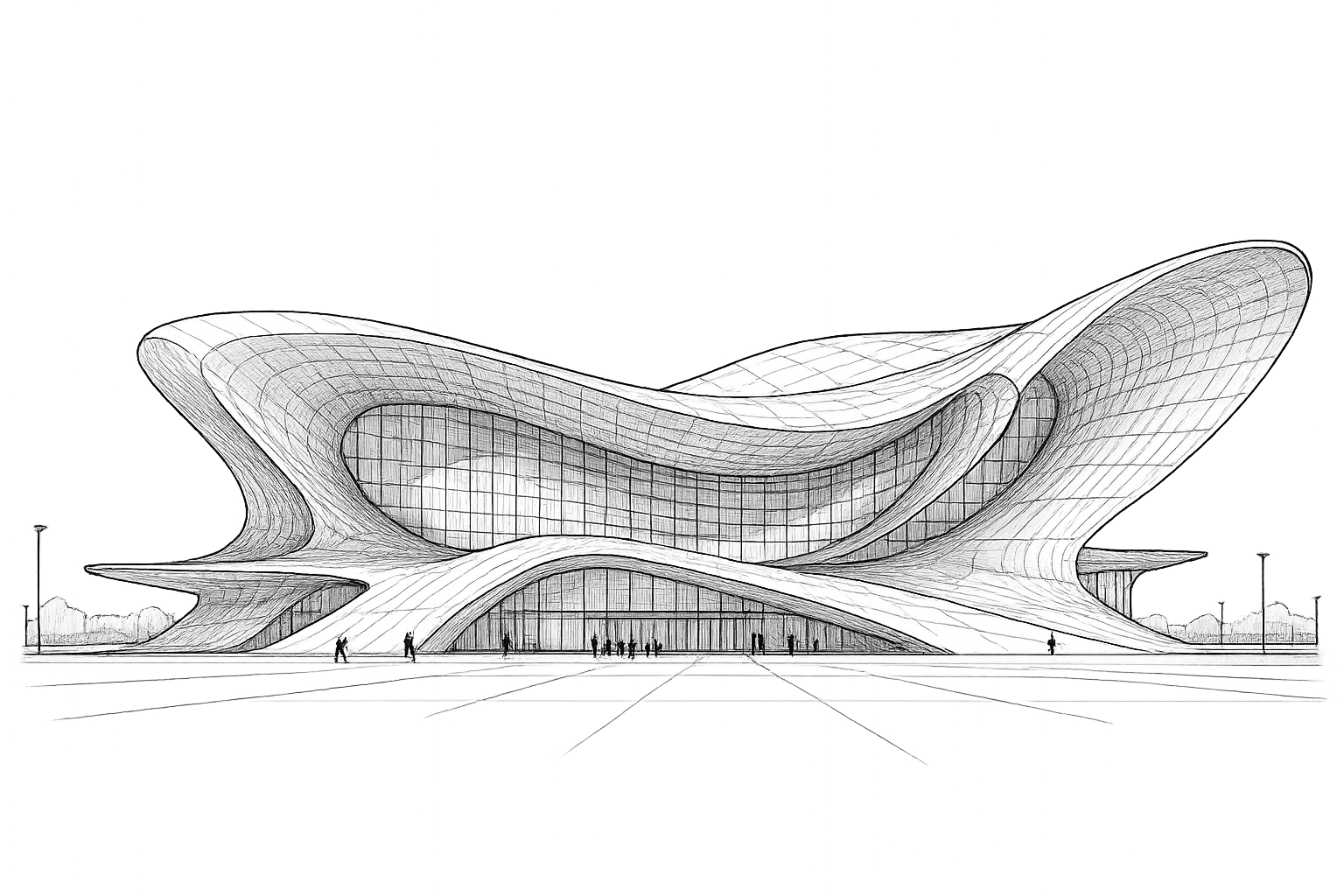
In Context — Where Vision Meets Reality
No architectural project emerges from nothing. Every structure, sketch, or spatial idea responds — to crisis, to culture, to climate, to code. Architecture reflects the urgencies of its time, sometimes embracing them, sometimes resisting. This section explores those intersections: housing protests turned into design, urban voids reprogrammed into experiments, infrastructures reimagined as poetry. Context here isn’t background — it’s the engine.
Some of these works engage with inequality, surveillance, displacement, or ecological collapse. Others respond to digital shifts or geopolitical tension. What binds them is their refusal to stay silent. Architecture becomes a tool — of critique, of adaptation, of hope. Each project is rooted in its world, even when it seeks to reinvent it. Some respond softly. Others erupt.
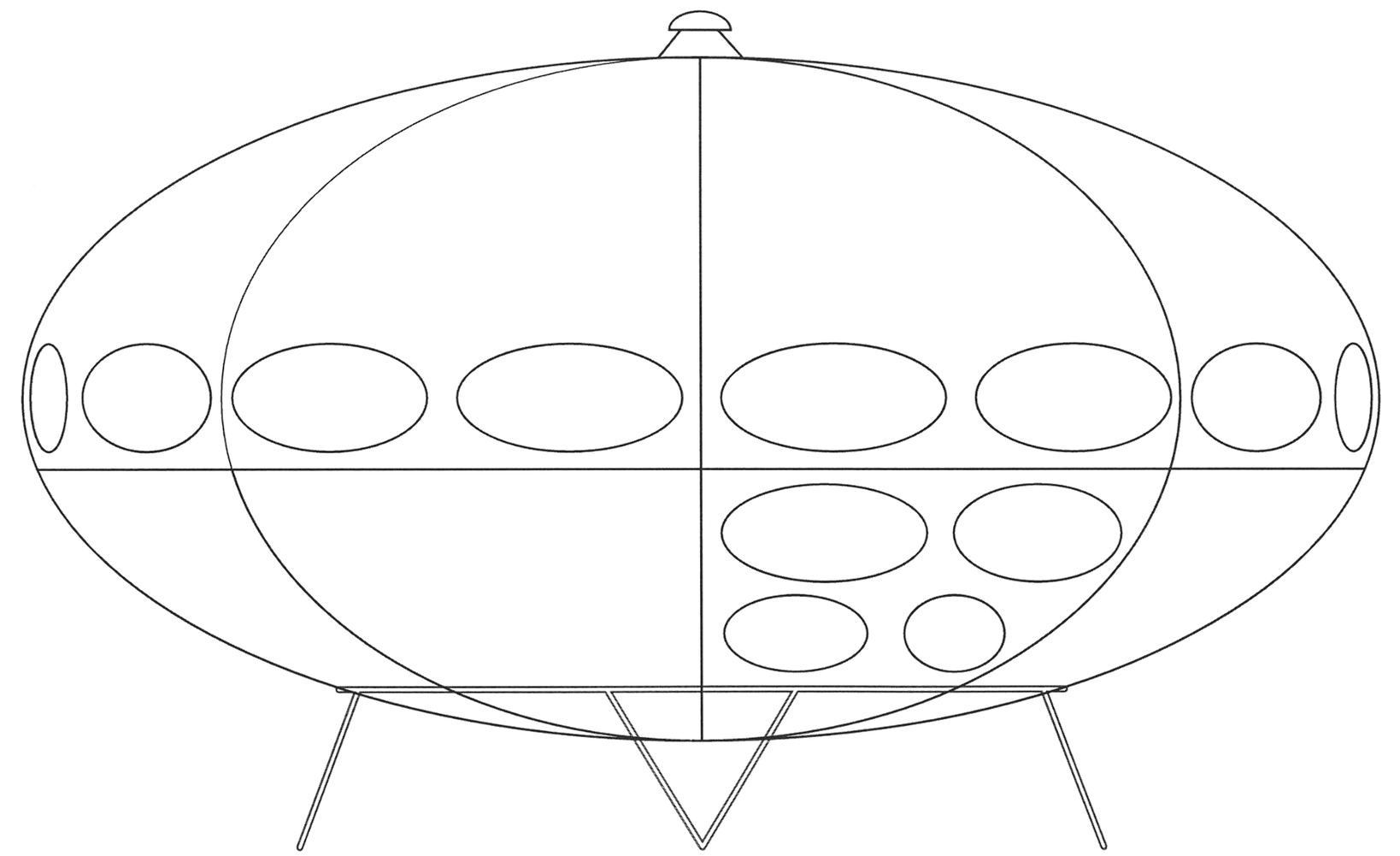
In Ideals — Building with Meaning
Each architectural line embodies a stance—toward order or disruption, harmony or provocation. Buildings are visible values: blueprints that decide who belongs, how we live, what we keep, and what we erase. Whether utopian or dystopian, every project asks more questions than it answers.
Here, ideals become concrete. You’ll see megastructures of hope, vertical ecologies, inflatable critiques of tradition, and gravity-defying virtual worlds. Loud or quiet, each one challenges us: what world will we build, and who gets to build it?